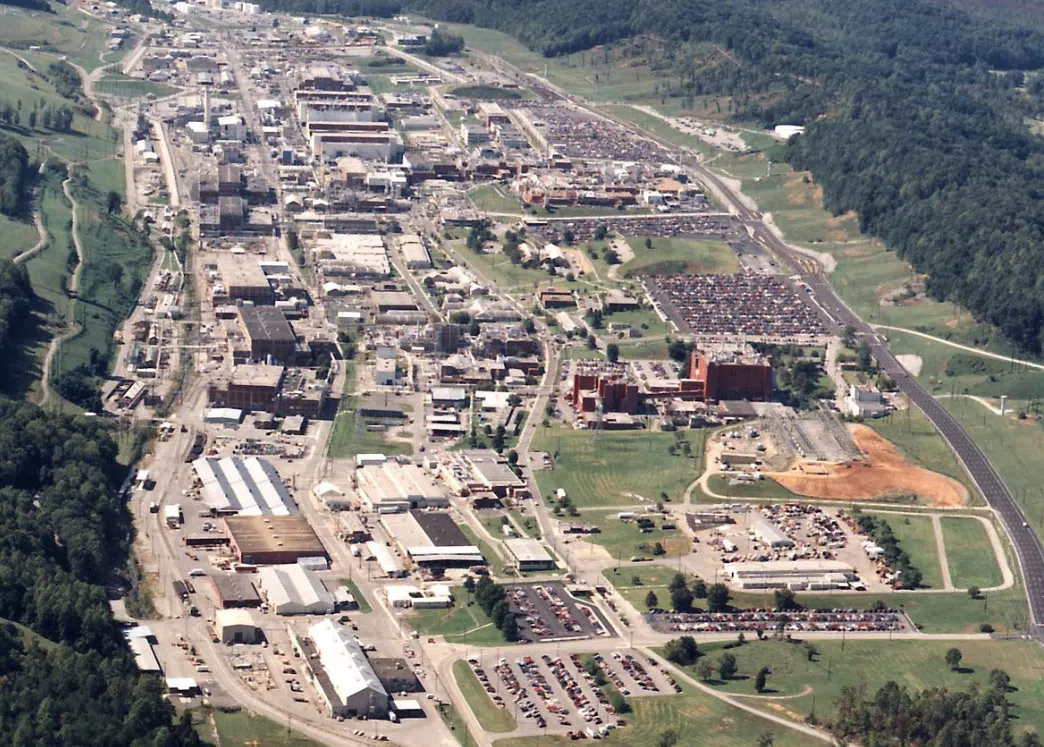
OAK RIDGE, Tenn. (story courtesy of WVLT) – The Y-12 National Security Complex downgraded Building 9206 from a nuclear facility to radiologically contaminated, a milestone that reflects significantly reduced risk and moves the building closer to eventual demolition.
Building 9206 was constructed in 1944 and served as a sister facility to another production building with historical missions including chemical recycling and processing for the beta stage of the electromagnetic separation plant.
The facility was shut down in 1994, leaving a large amount of contaminated equipment and materials behind. Since the building contained nuclear materials, it had to be monitored and managed. Efforts to remove the contaminants began shortly after the facility was closed.
In 2015, the Transition Strategy program received funding to downgrade the facility with two primary drivers: reporting lessons learned before downgrading other production buildings and removing material from Building 9206 that would need to be processed through another production building prior to shutdown.
“Our goal was to deactivate and downgrade Building 9206 by the end of 2025 to reduce nuclear criticality safety risk, free up valuable resources and apply lessons learned to efforts in other production buildings,” Building Transition Strategy Program Manager Anita Hazelwood said.
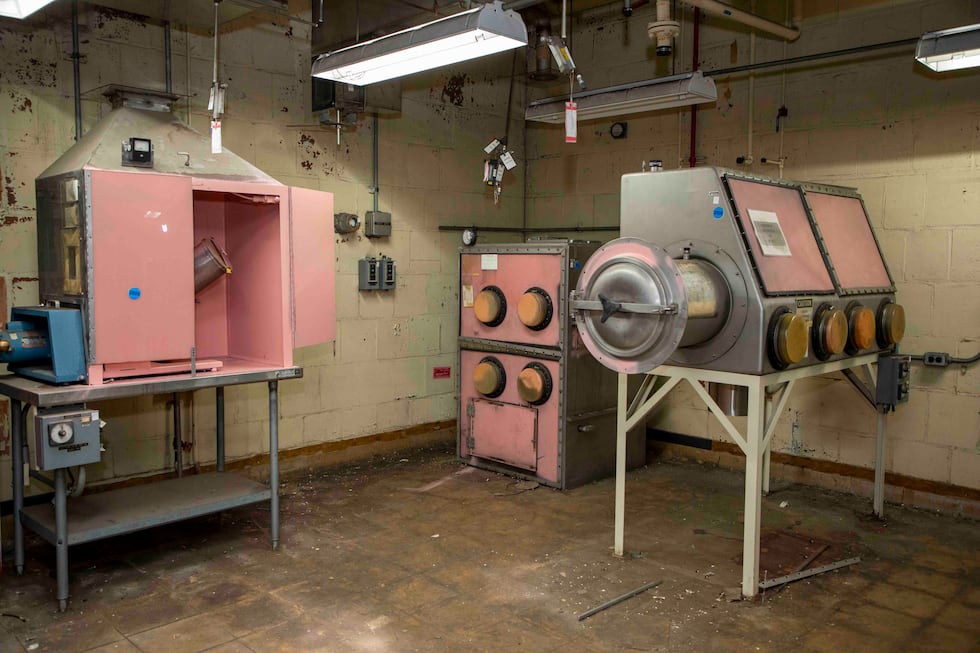
In order to complete the program, the following had to be completed:
- Drain fissile solutions
- Remove any holdups or components
- Isolate system/components to prevent water ingress
- Apply fixative to isolate and prevent movement of residual holdup
- Complete a final evaluation in support of downgrade and turnover
The team developed lessons learned for deactivation/decontamination of future buildings, including developing a nuclear criticality safety downgrade strategy, allotting dedicated resources for key disciplines and conducting long-term facility maintenance.
The building will transfer to Y-12’s Legacy Facility Stewardship program for management, ensuring the facility remains in a safe configuration until the U.S. Department of Energy Office of Environmental Management begins demolition work in the future.