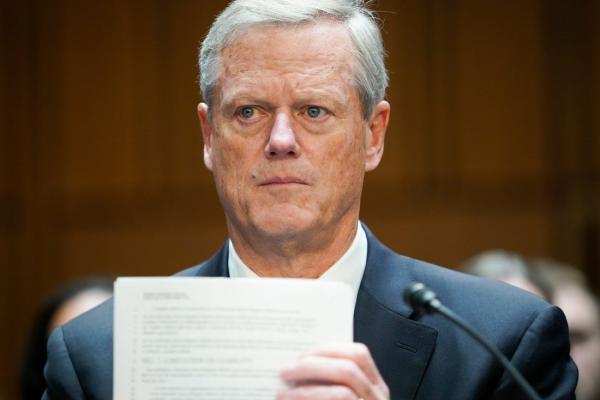
The Division I Board of Directors directed the Division I Cabinet to move forward with a major change to NCAA eligibility rules Monday, but president Charlie Baker said he won’t recommend that current seniors and graduates be grandfathered in.
The model in question will allow NCAA athletes to play up to five years of their sport in a five-year window, with the timer starting the academic year after they graduate high school or turn 19, whichever comes first.
“The time is now to reform the period of eligibility rules to provide Division I student-athletes and our schools clear and consistent standards that align with current college athletes’ experiences,” Virginia Tech president and board chairman Tim Sands said in a statement. “The board fully supports student-athletes receiving the unprecedented financial benefits now available to them and emphasized these changes would protect opportunities for high school student-athletes to access the benefits only college sports can provide while delivering predictable outcomes for student-athletes and our schools.”
The Division I Cabinet will meet May 22 and potentially vote on the issue that day.
However, the NCAA’s release makes sure to carve out an exception for players whose eligibility runs out in the current academic year, 2025-26: “new rules are not expected to retroactively apply to student-athletes whose eligibility is or will be completed by the spring of 2026.”
The board of directors was said to have “expressed support” for this key caveat, and in an interview with ESPN, Baker also stood behind it.
“If you’ve used up your eligibility, you’ve used it up,” Baker told ESPN, describing himself as “pretty optimistic” the new rules would pass.
Vanderbilt basketball player Tyler Nickel responded to Baker’s stance with some discontent on social media.
“(S)o we had to play with and against fifth years our entire time in college, but we don’t get one? (A)nd everyone after us gets one too?” Nickel wrote.
Several classes before Nickel’s were awarded a fifth year of eligibility due to the 2020-21 season being impacted by the COVID-19 pandemic. Nickel entered college in 2022-23.
To Nickel’s point, it is unclear if an exclusion for the current graduating class would hold up under a legal challenge.